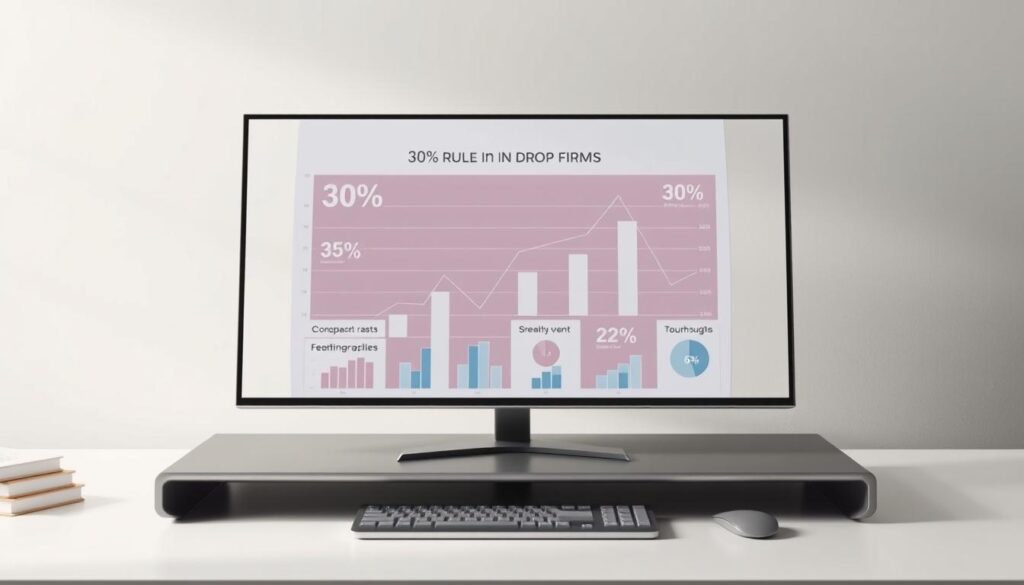
Financial markets feature unique participants known as proprietary trading organizations. These entities engage in market activities using their own capital. This approach differs from traditional brokerages that rely on client commissions.
The primary goal involves generating profit directly from shrewd market movements. Success for the organization is tied directly to financial performance. This creates powerful incentives for innovation and sophisticated risk management.
These groups operate across diverse asset classes. Their activities include stocks, bonds, commodities, and currencies. They position themselves as active market participants rather than simple intermediaries.
This active participation contributes significantly to overall market health. It enhances liquidity and helps stabilize asset prices. The presence of substantial capital can narrow bid-ask spreads for everyone.
For talented individuals, these organizations offer a remarkable pathway. They provide access to significant capital and advanced trading technologies. This support system accelerates professional development for ambitious market participants.
Introduction to Proprietary Trading
Capital deployment for direct market participation defines the core of proprietary trading. This financial activity involves using a company’s own money instead of client funds. The goal is straightforward: generate profit from shrewd investments.
Defining Proprietary Trading and Its Importance
Often called prop trading, this practice represents a significant shift from traditional models. Organizations maintain full control over strategies and risk. This direct link between performance and profit creates powerful incentives for excellence.
The importance lies in its potential for higher returns. It also allows for complete strategic autonomy. Firms are not limited by client directives or commission-based pressures.
Overview of Prop Trading Firms in Modern Markets
These entities operate across diverse asset classes. Their involvement is crucial for a healthy financial ecosystem.
They contribute significantly by providing continuous liquidity. This activity helps stabilize prices and narrows spreads for all participants. The evolution of technology has further expanded their capabilities.
Common financial instruments utilized include:
- Equities and shares
- Futures and options contracts
- Foreign exchange currencies
- Various derivatives
This model offers a compelling path for talented individuals seeking capital access and advanced tools in competitive environments.
What is a Prop Trading Firm?

At the heart of specialized financial operations lies a distinct business model centered on capital allocation. This framework connects skilled individuals with substantial resources for market participation.
The arrangement creates a symbiotic relationship where performance drives mutual success. Both parties share in the financial outcomes of market activities.
Firm Structure and Funding Mechanisms
Capital distribution forms the foundation of these operations. Organizations provide access to substantial resources based on demonstrated ability and track record.
This performance-driven environment rewards disciplined risk management. Successful market participants receive greater capital allocation over time.
Difference Between Prop Trading and Client-based Trading
Traditional brokerages earn revenue through commissions on client transactions. Their focus remains on facilitating orders rather than direct market participation.
In contrast, proprietary operations utilize company capital for direct market engagement. This approach captures the full value of successful trades before profit distribution.
The separation from client-facing activities ensures autonomous decision-making. This independence prevents potential conflicts of interest in market operations.
Types of Prop Trading Firms and Their Operational Models

The proprietary trading ecosystem comprises multiple organizational types with unique operational approaches. These entities differ in capital sources, regulatory frameworks, and strategic advantages.
Understanding the landscape helps identify the right fit for different market participants.
Independent Prop Firms vs. Brokerage Firm Desks
Independent organizations operate autonomously using exclusively their own capital. They avoid client fund handling, keeping profits and risks internal. This model offers maximum flexibility in strategy development.
Brokerage desks function within larger financial institutions. They benefit from existing infrastructure and market flow information. Access to trade flow data provides significant competitive intelligence.
Specialized operations exist within investment banks with dedicated desks. These benefit from advanced technology while facing stricter oversight. Hedge funds represent another category, balancing proprietary activities with investor management.
High-frequency organizations use sophisticated algorithms for rapid execution. They often serve as market makers while pursuing proprietary strategies. Commodity specialists like Glencore combine trading expertise with supply chain knowledge.
Each model offers distinct advantages based on capital access and market focus. The choice depends on risk tolerance and strategic objectives.
Trading Strategies Employed by Prop Trading Firms
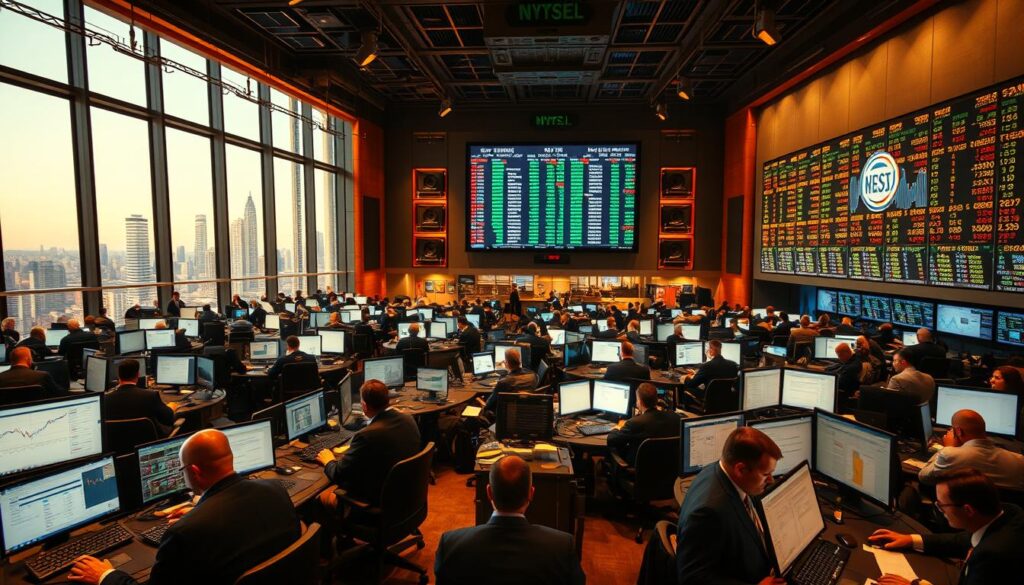
The tactical arsenal of professional market participants includes diverse methodologies for capitalizing on opportunities. These approaches range from short-term executions to longer-term positioning across various instruments.
Market professionals deploy sophisticated analytical frameworks to identify profitable setups. Their toolkit combines multiple disciplines for comprehensive market assessment.
Arbitrage, Statistical, and Technical Analysis
Arbitrage methodologies exploit pricing discrepancies across different venues. Statistical approaches identify mean-reversion patterns using quantitative models.
Technical examination forms a cornerstone of many successful operations. Chart patterns and momentum indicators guide entry and exit decisions.
These analytical methods work across equities, commodities, and derivatives. Combining multiple frameworks often yields superior results.
Market Making and Trend Analysis
Market making involves continuously quoting bid and ask prices. This activity provides liquidity while capturing spreads.
Trend identification follows sustained directional movements in various instruments. Tools like moving averages help gauge market momentum.
Seasoned professionals adapt their approaches to current market rhythms. They balance short-term opportunities with longer-term positioning strategies.
Technology and Tools Driving Prop Trading
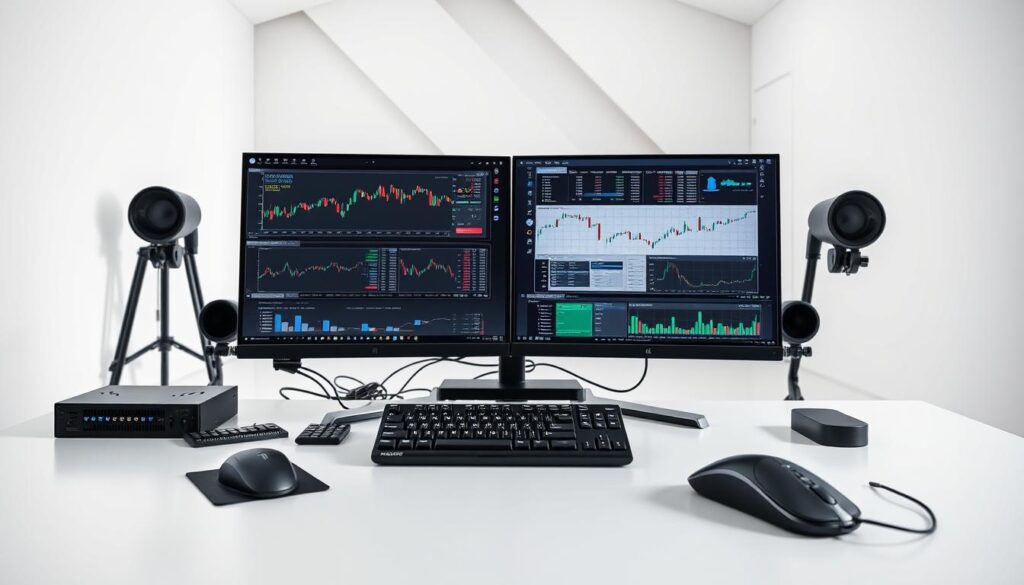
Digital transformation has fundamentally reshaped how financial markets operate today. Sophisticated platforms provide the competitive edge necessary for success in fast-paced environments.
Automated Trading Systems and Algorithmic Platforms
Automated systems execute strategies with precision impossible through manual methods. These platforms reduce human error while handling complex calculations instantly.
Algorithmic development represents a technological revolution in market participation. Proprietary algorithms analyze conditions and execute orders within milliseconds. This enables strategies that capitalize on tiny price discrepancies.
Real-time Data Feeds and Analytical Tools
Instantaneous market information forms the foundation of informed decisions. Real-time feeds deliver price quotes, order book depth, and economic indicators.
Analytical resources include advanced charting packages and technical indicators. Backtesting capabilities allow for strategy refinement before live deployment. Performance tracking systems help monitor results continuously.
Access to institutional-grade resources would be prohibitively expensive for individuals. Organizations absorb these costs, creating substantial value for talented participants.
Risk Management and Capital Allocation in Prop Trading

Successful market operations depend heavily on structured approaches to potential loss prevention. Organizations implement comprehensive frameworks to balance autonomy with capital protection.
Establishing Drawdown Limits and Risk Control Measures
Maximum drawdown levels serve as critical safety mechanisms. These predetermined thresholds automatically suspend activity when losses reach specified limits.
This protection benefits both the organization and individual participants. It prevents catastrophic losses while preserving resources for future opportunities.
Capital allocation follows a performance-driven model. Initial funding amounts reflect demonstrated ability and historical results. Consistent profitability leads to increased resource access over time.
Specific control measures include position size restrictions and sector exposure limits. Leverage constraints and daily loss boundaries further enhance security.
Effective risk controls actually enable sustainable profit generation. They prevent large drawdowns that can destroy compounding effects from consistent gains.
Technology plays a crucial role in monitoring positions in real-time. Automated systems calculate exposure across multiple securities and markets.
Sophisticated organizations optimize the risk-reward relationship rather than simply minimizing exposure. This approach allows flexibility for high-probability opportunities while maintaining overall portfolio security.
Exploring Career Opportunities within Prop Trading Firms

Building a professional career in financial markets often requires substantial capital resources. These organizations offer talented individuals pathways to access significant funding and advanced tools. This creates remarkable opportunities for ambitious market participants.
Trader Evaluation, Profit Splits, and Mentorship Programs
The selection process involves structured challenges and demo phases. Firms assess candidates based on performance metrics and risk management discipline. This evaluation tests consistency across various market conditions.
Compensation follows profit-sharing arrangements that benefit both parties. A trader generating $100,000 in profits under a 40/60 split keeps $40,000. Some agreements offer 100% of initial earnings up to certain thresholds.
Successful participants can scale their capital allocation over time. Starting accounts might range from $50,000 to $100,000. Consistent performance can lead to allocations exceeding $500,000.
Quality organizations provide comprehensive support systems. These include one-on-one coaching sessions and group learning environments. Access to professional communities accelerates skill development.
Additional benefits extend beyond direct monetary compensation. Participants gain exposure to diverse strategies and advanced technology. Networking opportunities with experienced professionals create valuable career advantages.
Final Reflections on the Evolving World of Prop Trading
Looking ahead, proprietary trading organizations face both opportunities and challenges in an increasingly digital marketplace. Regulatory frameworks like the Volcker Rule continue to shape operations, particularly for large banking institutions. This landscape ensures responsible capital deployment while maintaining market stability.
These trading firms provide dual benefits to financial ecosystems. They enhance liquidity and price discovery while creating career pathways for talented individuals. This symbiotic relationship allows skilled traders to access substantial capital without personal investment requirements.
Future trends point toward greater algorithmic sophistication and expansion into digital assets. The ability to adapt to technological changes remains crucial for sustained success. Proprietary trading’s unique value proposition continues to evolve, balancing innovation with disciplined risk management.